April 11, 2026 Drought!
Well, this is not the happiest page we’ve ever done, but our weekly newsletter from Black Cat Farms told us it was time to do it. Martin has been watching the Colorado snow pack plot and was going to do a page on it eventually. Well, here’s what Jill & Eric Skokan had to say:
Happy Saturday, friends.
We’ve got some tough news to share. We will not have vegetables this week at our Farmers Market outlets in Boulder and Longmont today. In fact, we may not bring vegetables to our stands at all for the entire 2026 farmers market season. One word sums it up: drought.
We’ve been writing about it in this newsletter for months, encouraging us all to get out and perform rain dances. Many of us probably had some darn good moves and routines, but alas, none of it was enough.
The state is in the grip of a devastating, historic drought. As a result, much of what we planted to over-winter has died, due to lack of water. Meanwhile, our ditch water—affordable irrigation—has not yet been released for our fields.
At this point, we need to focus all of our attention on growing food for our restaurants. We will succeed at that endeavor. But we can’t grow enough for the farmers market.
This is not goodbye for the 2026 market season, however. Read on for much below, but in short, we’ll be working all night on Friday nights through the season to craft gorgeous breads and baked goods, using grains we grow and mill on our organic farm. You’ll find them, mountains of loaves, muffins, cakes and more, at both of our farmers market outlets. It amounts to a true farm-to-table bakery.
Let’s all pull for Front Range farmers, yes? We’re all facing similar challenges this year. We can’t think of any year in our 20+ years of farming that needed community support of agriculture more than 2026.
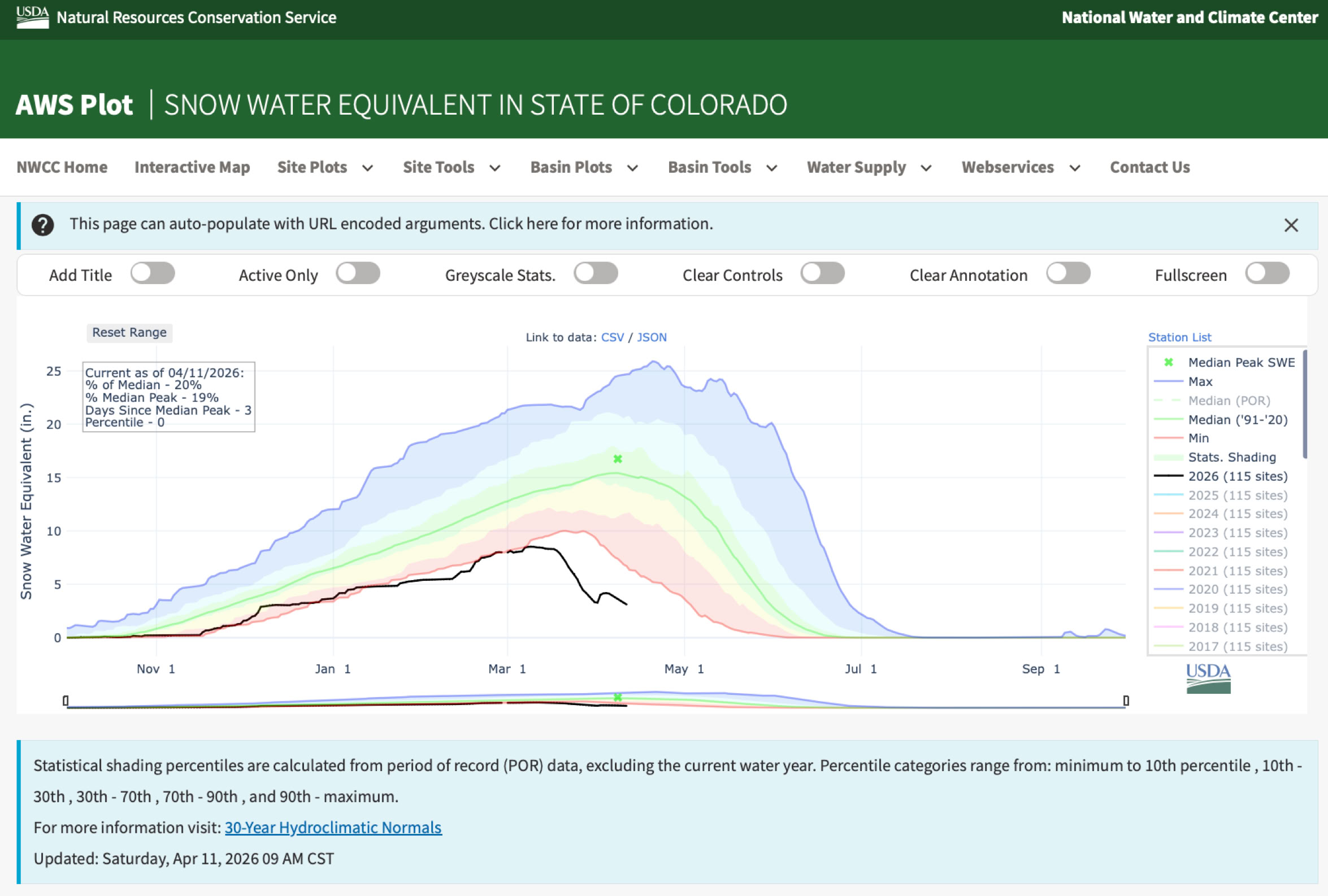
The USDA Snow Water Equivalent in State of Colorado plot. The black line is this year. The data goes only goes back to 1987, so it isn’t accurate to say that this the lowest snow pack in history, but it is not good!
What that AWS in the top left you ask? Yes, they actually tell you that they are using (A)mazon (W)eb (S)ervices (AWS) to generate the plot from their data.
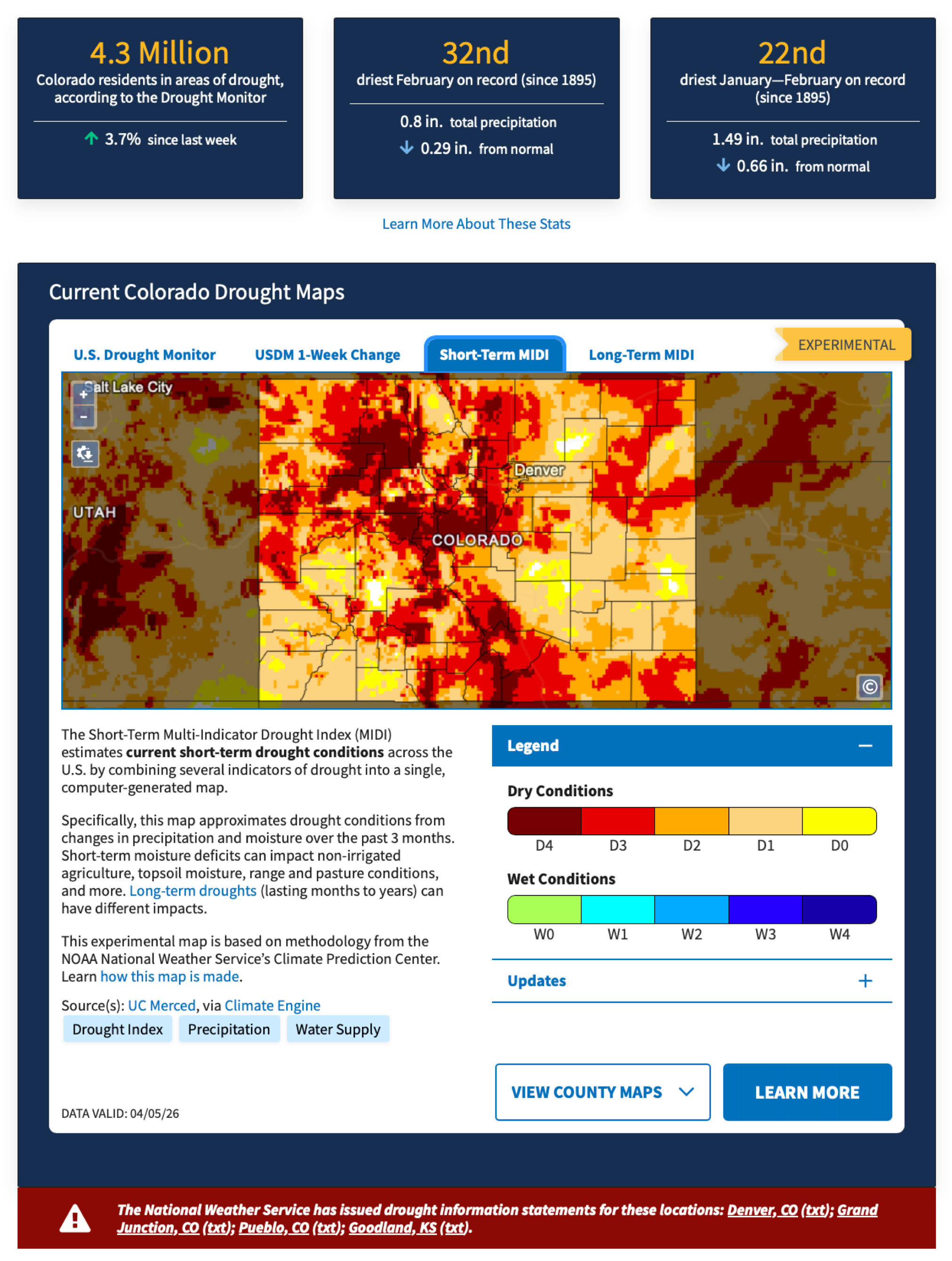
The Current Colorado Drought Map with the Short-Term Multi-Indicator Drought Index selected. We are in a very, very dry year, but actually a long ways from any record. The Snow basin data only go back to 1987, but the general precipitation data goes back to 1895.
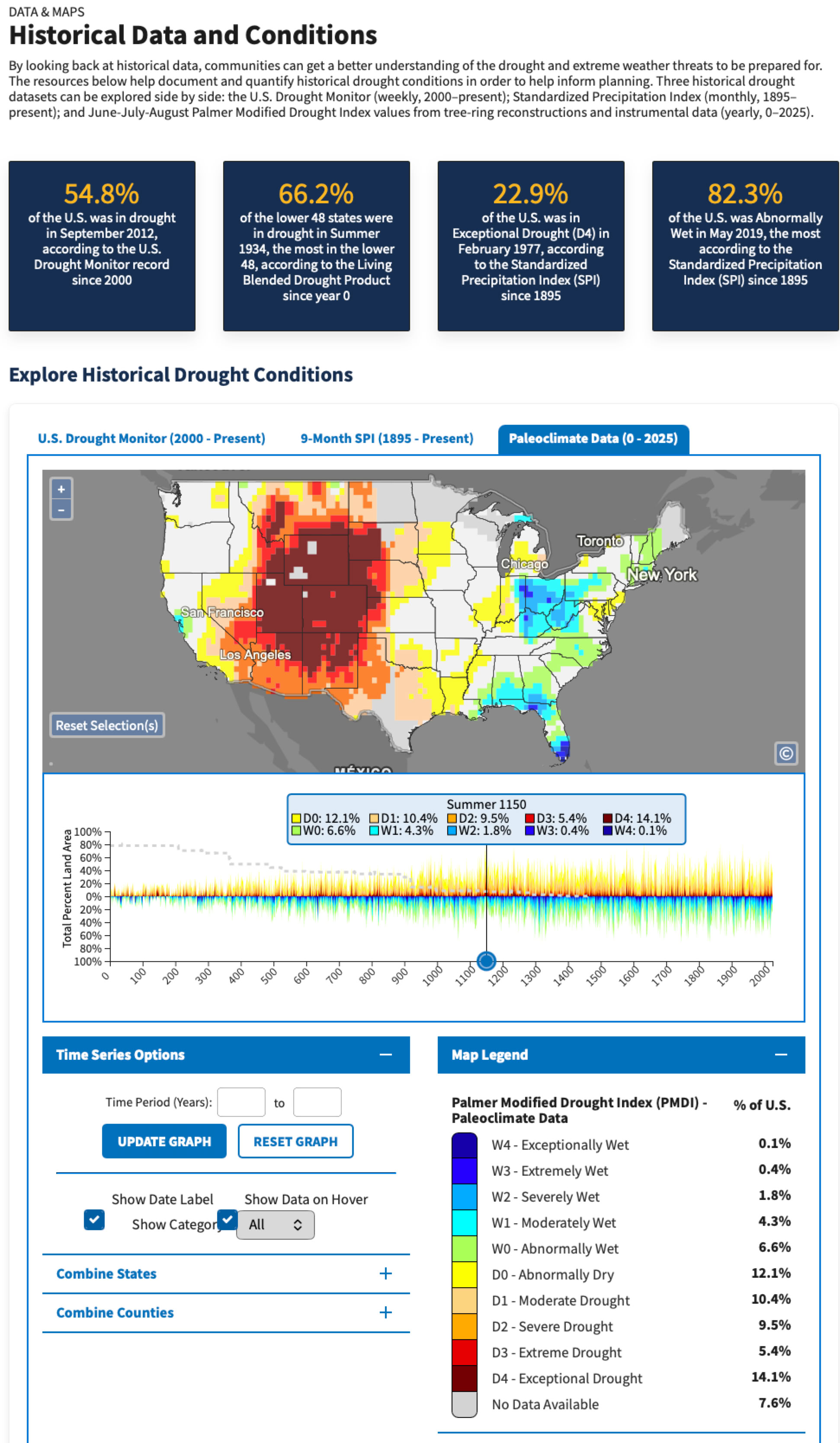
The Historical Data with the longest term Paleoclimate Data selected then the year 1150 was selected. You have to click on the plot to put that year’s data into the map. Now that was an incredibly dry year!
As you can see, nothing is really getting more severe, we have wet and dry years all the time, much more intensive droughts have happened, much wetter years have happened. There is no reason to panic over so-called (man-caused) climate change.